
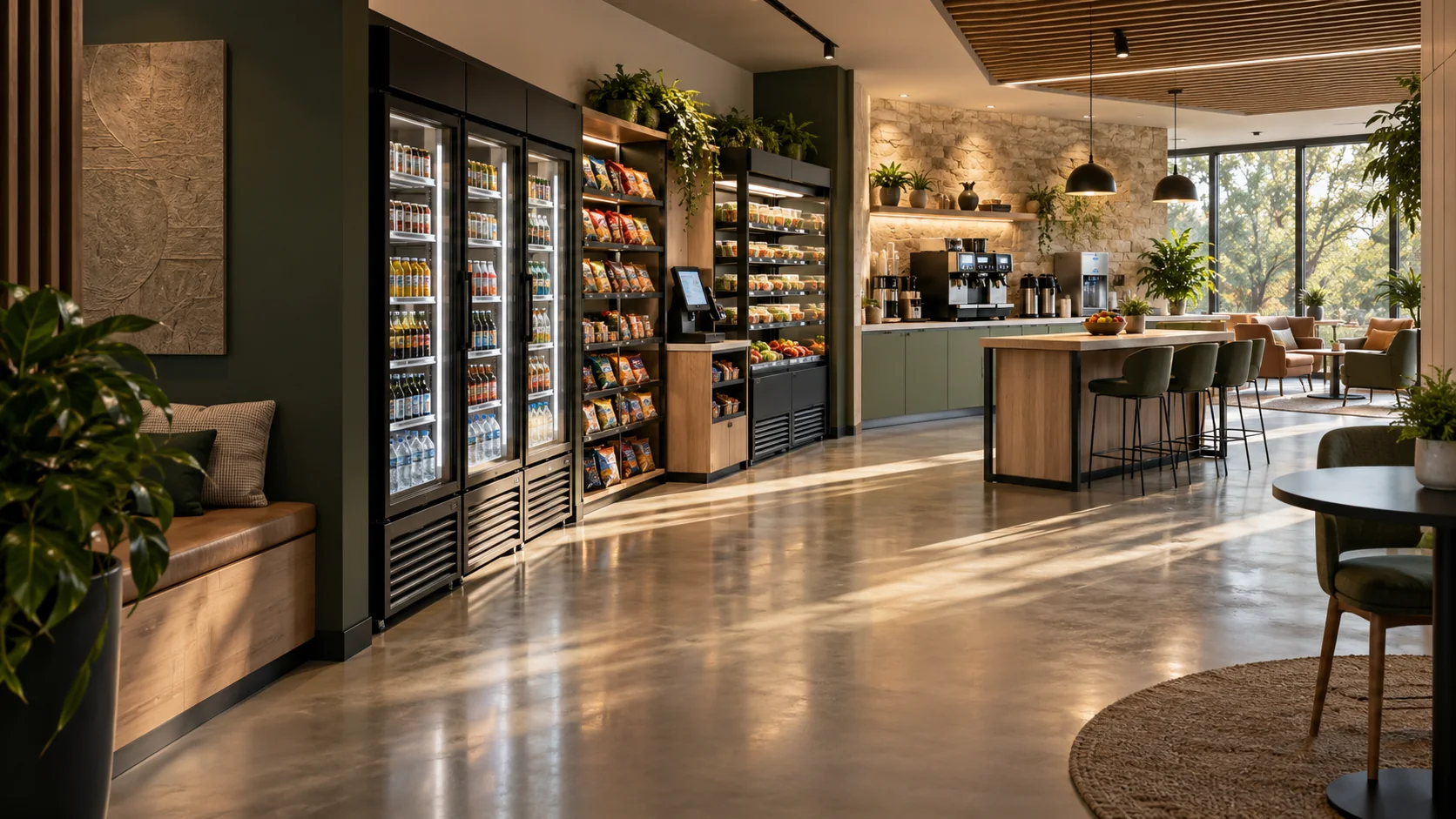
Looking for vending solutions in the Austin area? Greater Vending can help.
Austin Vending Services for Businesses and Workplaces
Compare vending machines, micro markets, coffee, pantry, and water service
Greater Vending helps Austin-area businesses compare vending machines, micro markets, office coffee, pantry service, smart coolers, and breakroom options from local operators that serve their specific location, facility type, and headcount. Whether you manage an office, apartment community, school, warehouse, healthcare facility, dealership, hotel, or public-facing workplace, we help you understand the options and get connected with a provider that fits.
Why compare operators instead of calling one vending company?
Not every vending operator is the right fit for every location. Route coverage, account size, product mix, service frequency, micro market readiness, coffee needs, and facility type all matter. Greater Vending is an independent education and matching service—not the company that installs or stocks the equipment. We clarify your requirements and introduce one to three qualified local operators so you can compare fit before choosing.
- Compare vending machines, micro markets, coffee, pantry, smart cooler, and water options
- Find operators that actually serve your part of the Central Texas corridor
- Match the service model to your facility type, headcount, shifts, and access requirements
- Compare proposed service cadence, response expectations, assortment, and program economics
- Use the matching service at no cost and with no obligation to proceed
Vending and breakroom options available in the Austin area
Austin vending machines: A practical fit for offices, warehouses, schools, apartments, hotels, dealerships, and public-facing locations that need convenient snacks and drinks.
Austin micro markets: A better fit for larger workplaces and communities that need fresh food, drinks, and meal variety beyond traditional vending.
Austin office coffee service: A simple way to improve the daily breakroom experience for staff, tenants, guests, and customers.
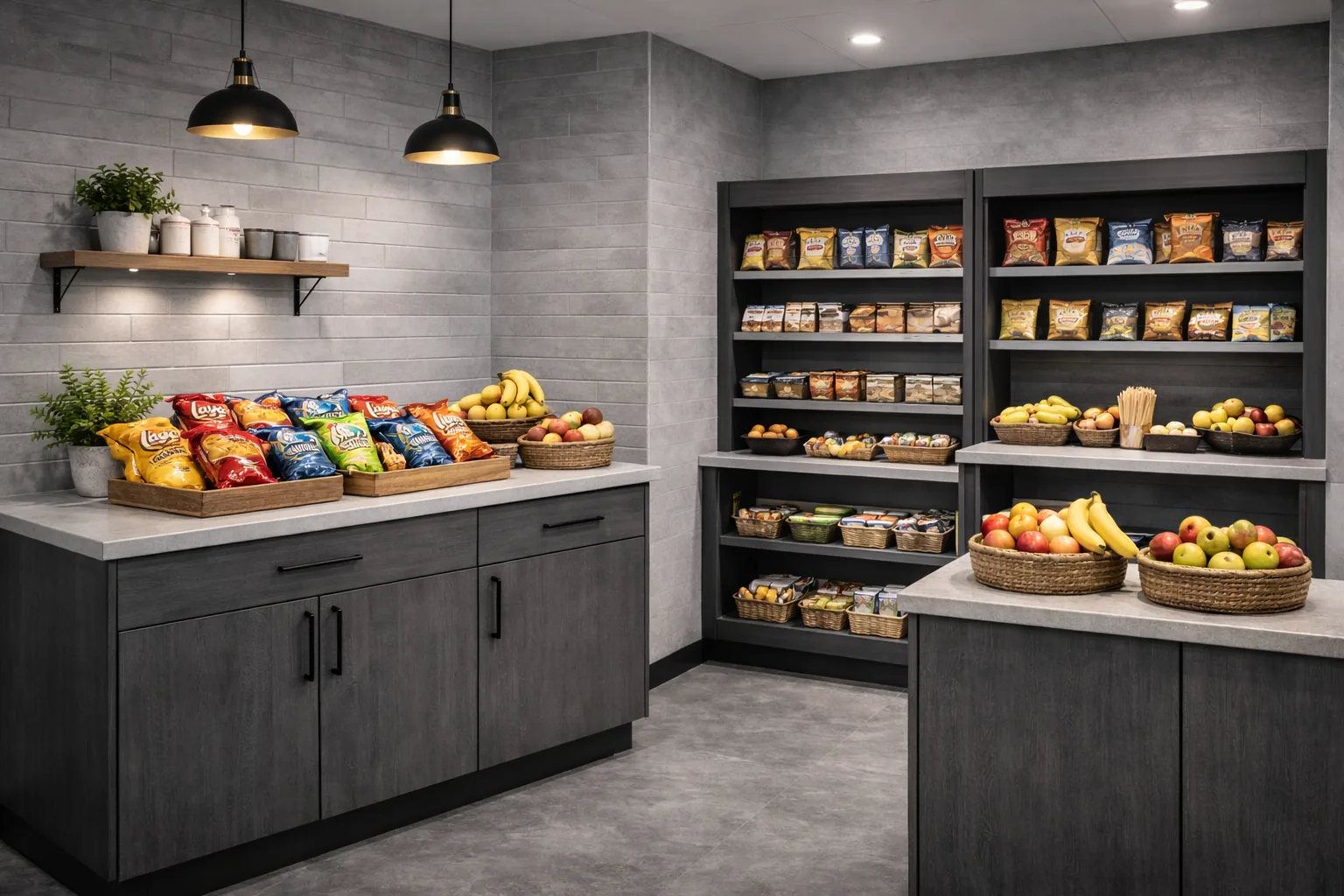
Austin pantry service: A strong option for employers that want to provide snacks and drinks as workplace perks.
Austin breakroom services: Combine vending, coffee, pantry, and support into one workplace refreshment strategy.
Austin smart coolers: A flexible option for controlled-access spaces or locations that want fresh food with a smaller footprint.
Austin bottleless water coolers: Improve hydration and reduce bottle handling in offices, clinics, and shared facilities.
Industry and location fit in Austin
Explore vending services for offices, vending services for apartments, vending services for schools, vending services for warehouses, vending services for auto dealerships, and vending services for hospitals and clinics across ATX and nearby submarkets.
Service area across Austin and nearby communities
We support businesses in Austin, Round Rock, Pflugerville, Georgetown, Cedar Park, Leander, Lakeway, Bee Cave, Dripping Springs, Buda, Kyle, San Marcos, and nearby Central Texas communities.
Choose the Austin service or facility that matches your project
Compare service formats
Unattended retail in Austin
Planning self-serve service across offices or hotels? Use these guides to compare formats and rollout expectations.
How Austin businesses evaluate breakroom services
In Austin and greater ATX, buyers usually compare reliability before amenities. Teams ask whether vending for Austin offices can scale as headcount changes, whether warehouse and healthcare sites can support higher-throughput product mixes, and whether pantry plus coffee programs can be rolled out without adding admin burden. We recommend starting with Austin vending machines and micro markets in Austin, then layering in Austin office coffee service or Austin office pantry service where utilization supports it.
Why route fit matters across Greater Austin
Austin is growing in multiple directions at once, so service consistency depends on corridor design. A provider that is strong in central office clusters may not run the same cadence in Kyle, Buda, or Dripping Springs. We prioritize operator coverage across Round Rock, Georgetown, Pflugerville, Lakeway, and southbound commuter corridors so refill windows and issue response times stay predictable.
Program fit by Austin property type
Office campuses often prefer a blended program: market-first, then backup machines. Warehouses and manufacturing sites usually need fast checkout, hydration depth, and overnight servicing options. Hotels and multifamily sites emphasize uptime and guest-facing presentation, while medical facilities prioritize dependable stocking and cleaner assortments. You can compare these setups in the Austin offices, warehouses, hotels, and medical clinics guides. Austin hotels replacing a front-desk sundry shop can see our Austin hotel micro market guide.
Local next step for ATX teams
If you are planning across more than one site, share your headcount, shift schedule, and access constraints first. We will help you decide where vending, markets, coffee, and pantry should launch in phases, then connect you with route-capable operators for Greater Austin vending execution.
Related pages and next steps
Plan by Austin corridor
More Austin decision resources
Not ready to request a quote yet?
Download our free Austin Breakroom Planning Guide — covers how to choose between vending, micro markets, coffee, and pantry programs based on your headcount and facility type.
Get the Free Planning GuideAustin FAQ
These are the most common planning questions we hear from offices, warehouses, clinics, and mixed-use properties across Greater Austin.
How do you handle multi-site programs across ATX suburbs?
We map each site to realistic route windows first, then recommend one rollout plan that can cover Austin, Round Rock, Georgetown, Pflugerville, Kyle, and nearby communities without service gaps.
What should we prepare before requesting Austin vending proposals?
Share address, headcount by shift, access hours, and any loading dock or security constraints so operators can scope Austin vending machines or market service accurately.
Can we combine micro markets, coffee, and pantry in one Austin program?
Yes. Many Austin teams start with one core format, then add coffee and pantry by location type once usage data confirms demand.
How many operators are introduced?
Most requests are matched with one to three operators so you can compare route depth, service communication, and program economics without inbox overload.